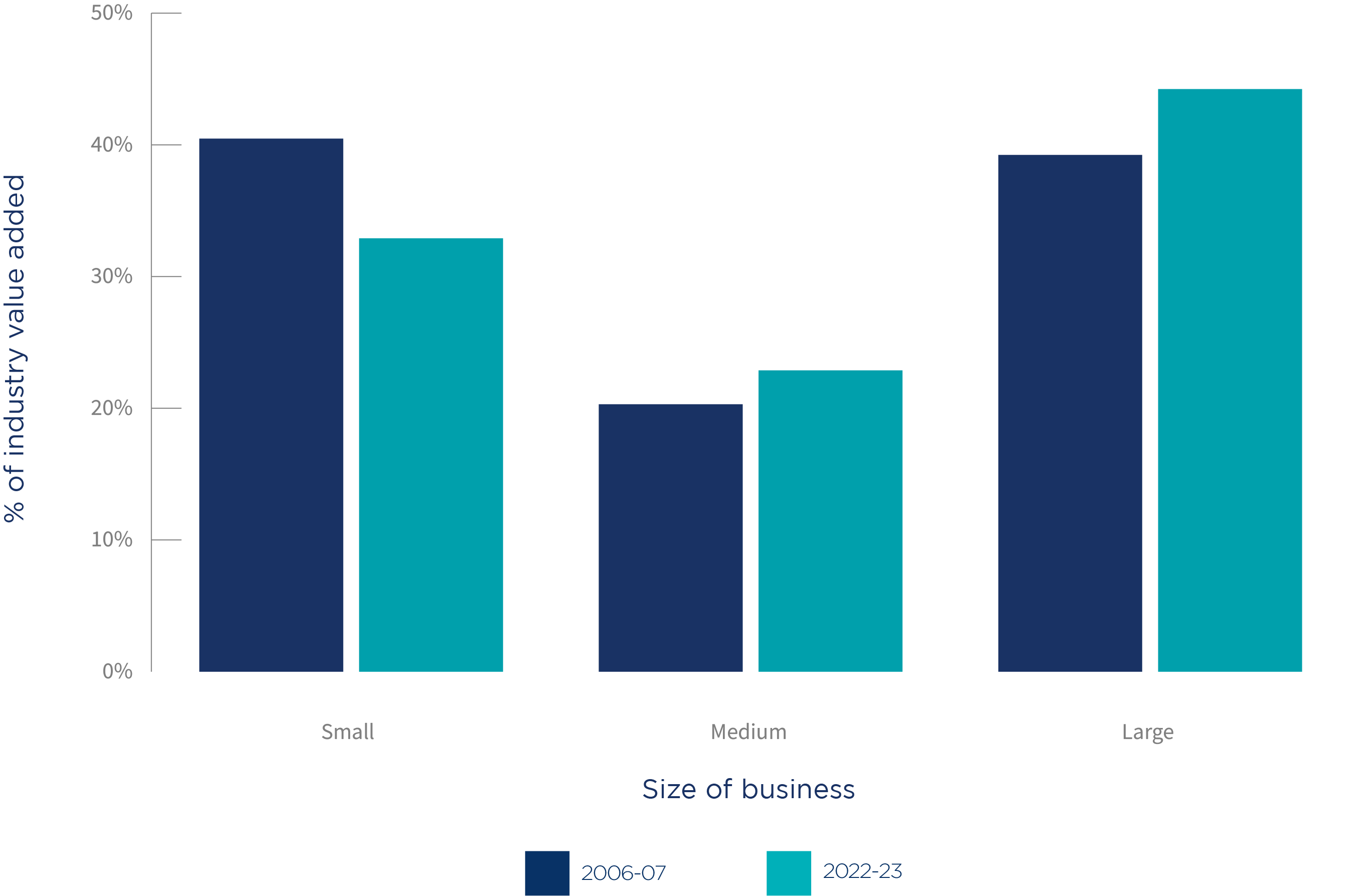
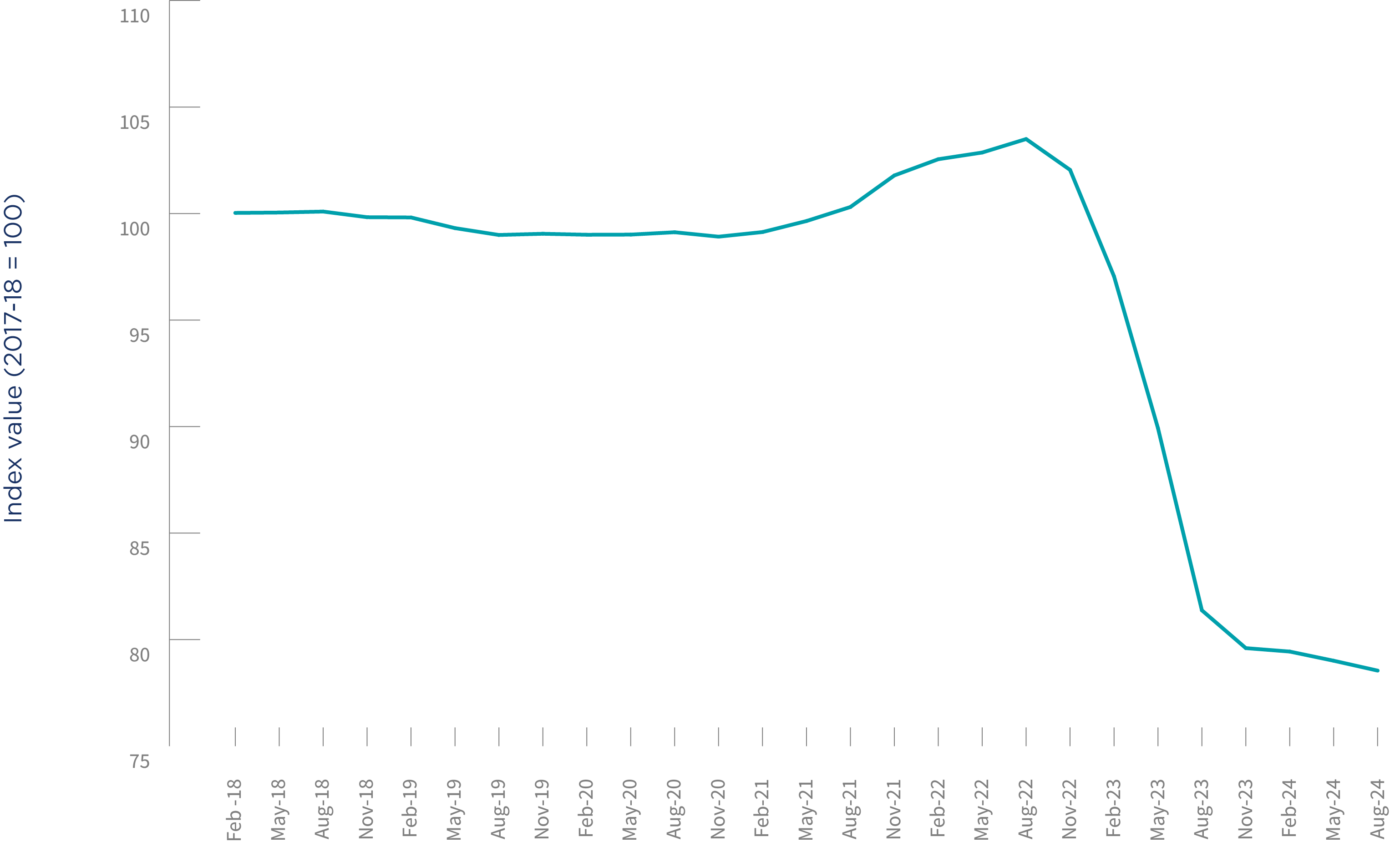
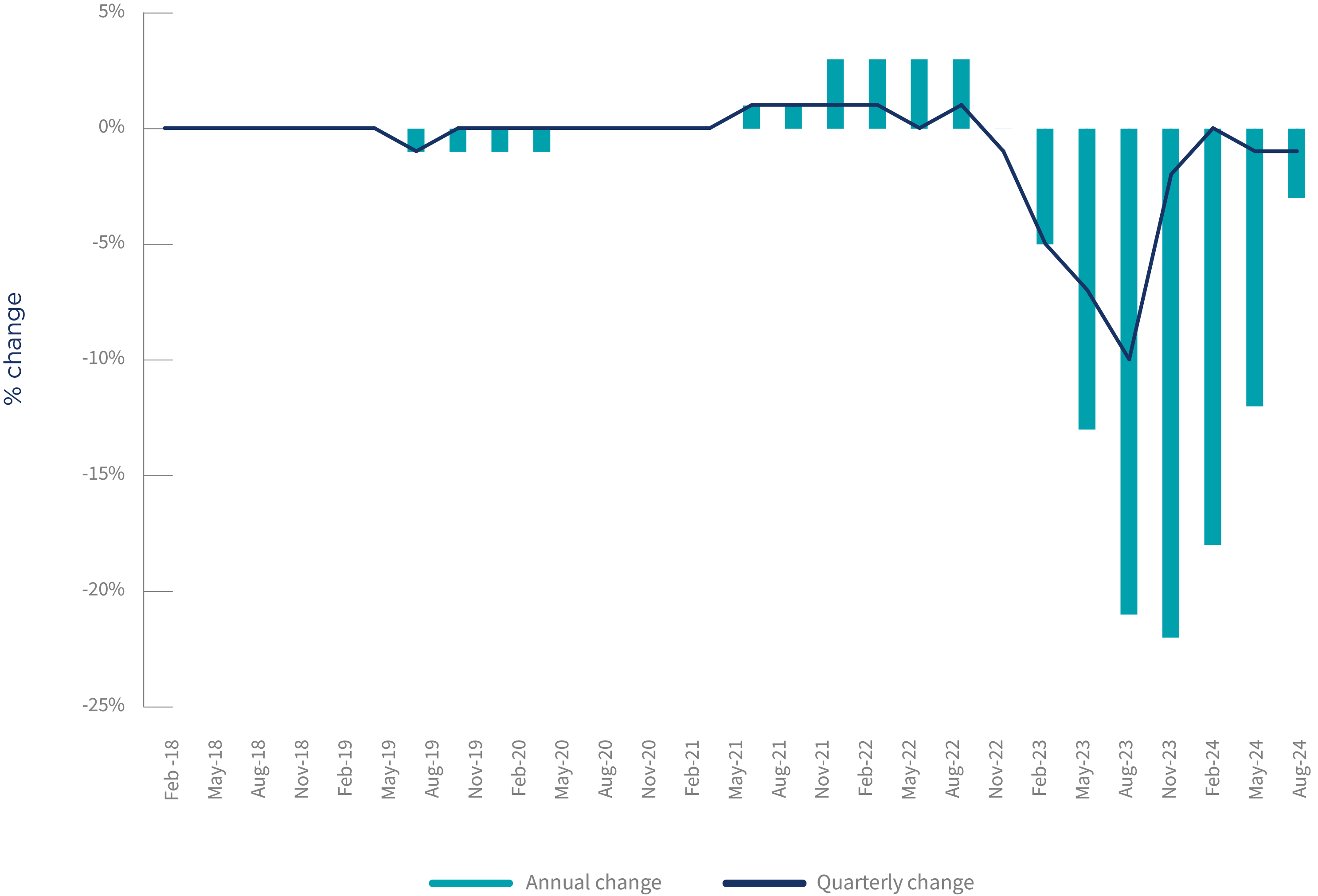
Almost 98% of businesses in Australia are small businesses – some 2.5 million which generate nearly $600 billion of economic activity accounting for 33% of our nation’s GDP.
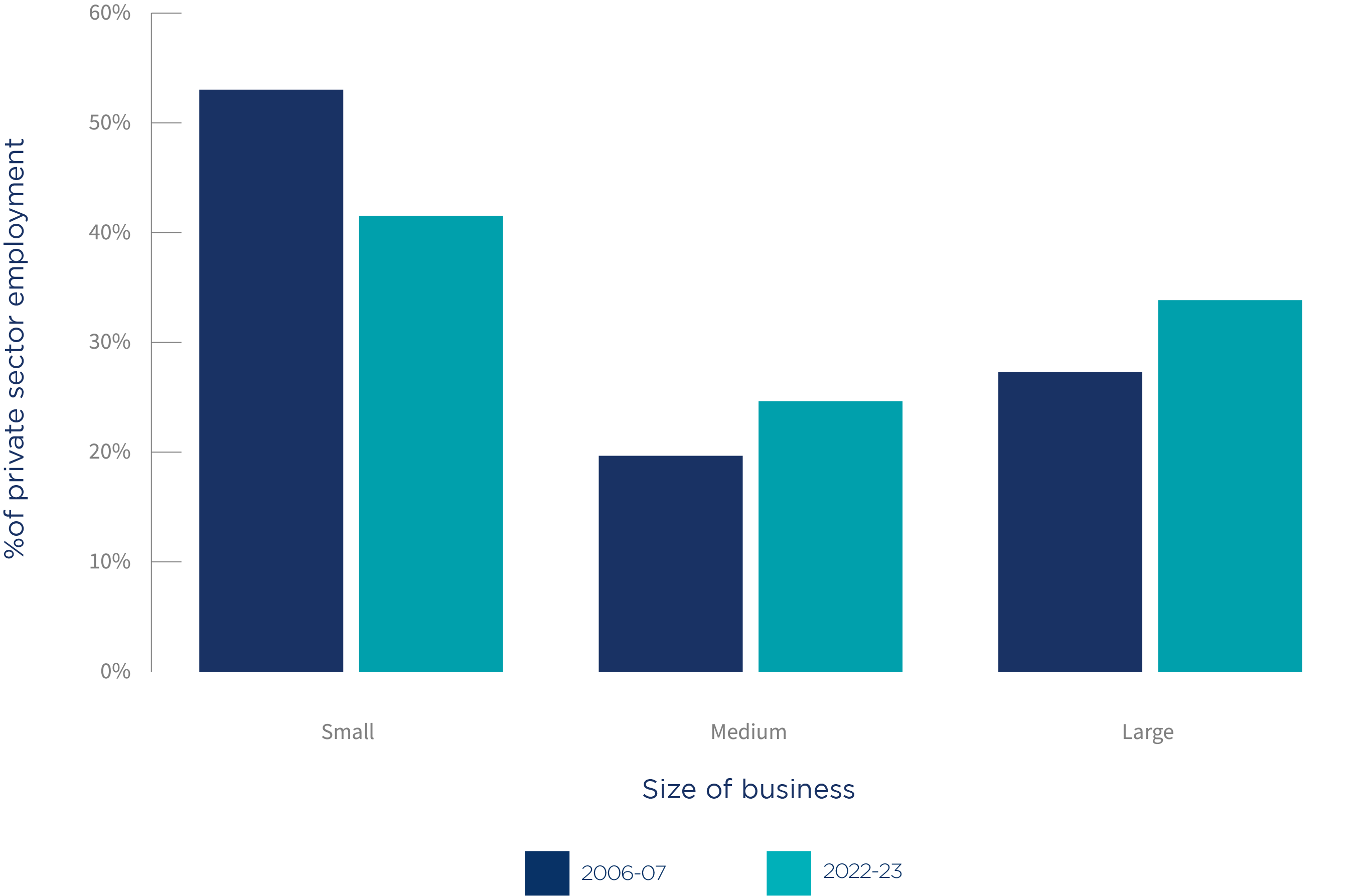
Small businesses provide jobs for 5.36 million people – 42% of the private workforce.
This contribution is truly worthy of recognition and celebration. Small business is a big deal.
But just back in 2006, small business contributed 40% of GDP and employed 53% of those with a private sector job.
If you are like me and believe small and family business is the engine room of our economy and a vital driver of innovation, wealth and opportunity creation, and key to lifting our nation’s productivity, this is a worrying trajectory.
We are sleepwalking into a ‘big corporate’ economy.
We need to do more to energise enterprise and create and nurture the spark that will inspire someone to turn an idea into investment, to build a business, to take on the risk and big responsibility of creating an opportunity-generating new enterprise, and to employ that extra person.
Small and family businesses need to be front of mind for our policy makers and regulators.
We need to constantly renew and re-nourish our commitment to providing the best possible environment for small and family business success.
New figures from the Tax Office reveal that 46% of small businesses did not make a profit in the most recent year of accounts available.
And some three-quarters of self-employed business owners, for whom their business is their full-time livelihood endeavour, are earning less than the average total weekly, full-time wage.
Sluggish economic growth combined with cost of doing business pressures, persistently poor productivity, tight labour markets, supply chain challenges, the flow through effects of high inflation, plus interest rate rises, are all taking their toll on small and family businesses.
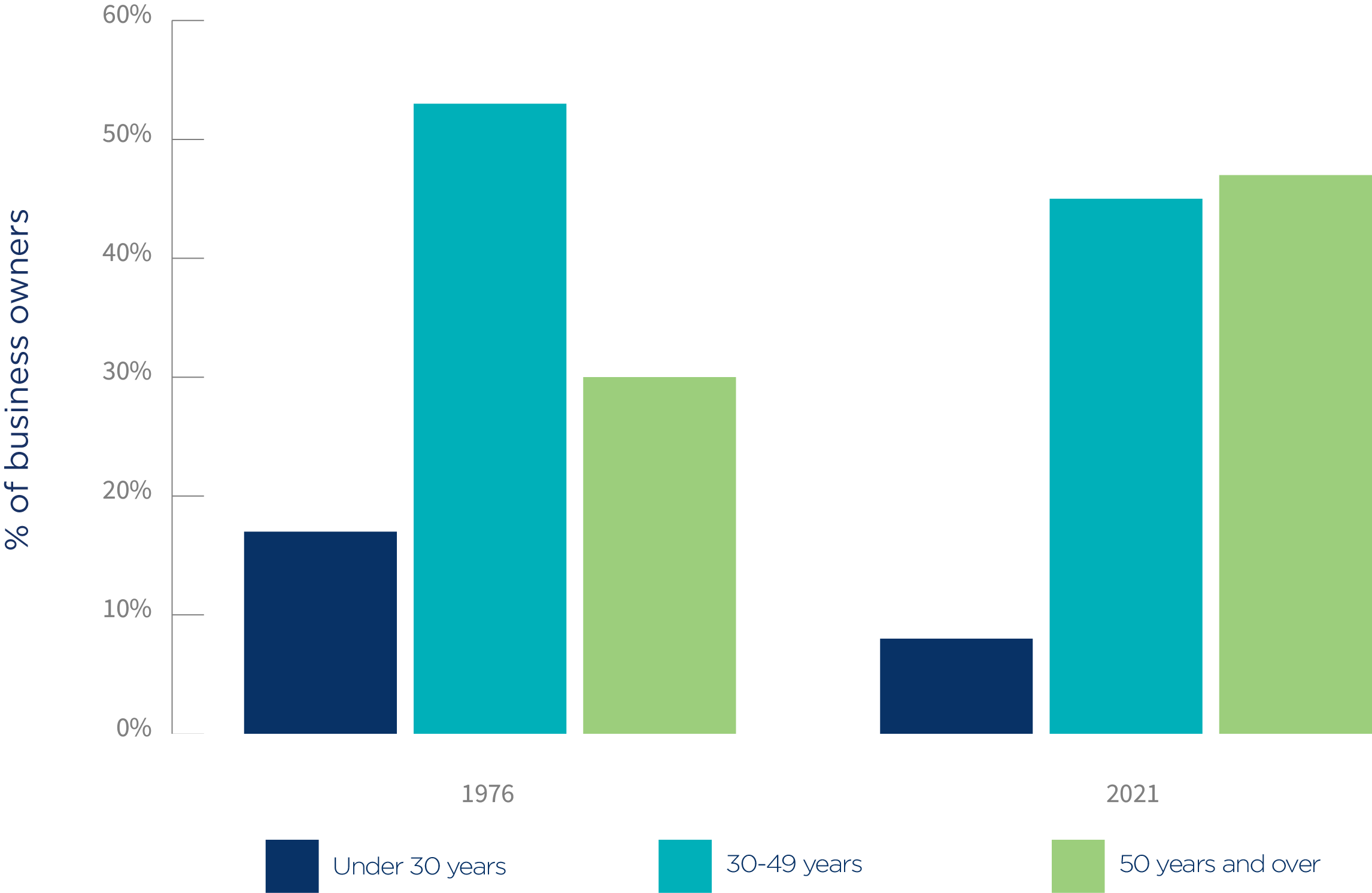
Our small business owners are also getting older with the average age now 50, up from 45 where it was in 2006. In the 1980s there were twice as many small business owners aged between 30 and 49 as there were aged over 50.
Today, only 8% of small business owners are under the age of 30, half what it was in the 1970s.
Why is the next generation increasingly not seeing self-employment or their own enterprise as a pathway for the future? At a time when young people, particularly, look for purpose as well as profit in their lives, to choose their own path and shape their own story, isn’t self-employment or running your own businesses a seemingly natural fit?
Surely, we can and must do more to make the risk and reward balance more attractive. We need to create a more supportive ecosystem to give enterprising people the best chance to be successful.
No one starts a small business because they are excited about the paperwork involved; yet the cumulative compliance burden and fear and consequences of doing something wrong is having a chilling effect on entrepreneurship.
A small business isn’t a shrink-wrap version of a big corporation. There’s no regulatory team, dedicated HR department, compliance specialists or sophisticated compliance systems.
Typically, it’s the owner – often at 10 o’clock at night - grappling with this paperwork after they’ve been running their business all day, surrendering more time with family and time to reset and refresh. Let’s remember, a small business is actually a time-poor, resource-constrained person.
Every well-intentioned change by Parliament or regulators risks adding to the mountain of red tape that gets between the owner, the business they lead and the customers they need to attract and delight.
There’s been a flurry of new workplace laws and compliance obligations, and cascading reporting requirements relating to modern slavery and climate-related financial disclosures, adding to what we call ‘white tape’ where big business is insisting on more and more information from small business suppliers.
Small and family businesses recognise their responsibilities but need a right-sized, actionable, fit-for-purpose, and efficient approach to compliance impositions with appropriate support and guidance.
A simple improvement that governments at all levels around the country can make immediately is to require every submission to Cabinet to include a small business impact statement. Preliminary and formal regulatory impact assessments and new policy proposals should start with and focus on small business implications, not consider this as an afterthought, if at all.
This would mean every time a decision is made, small business will be front of mind and bright on the radar screen.
We can and need to herald the importance of small and family business to the economy and our communities. By creating the Prime Minister’s Small Business Awards to celebrate excellence and achievement and inspire the next generation, we can powerfully send a clear message that small business people matter and are valued.
Small business owners feel acute pressure to ‘do it all’ and to keep up the appearance of being fine even when they are struggling with the big responsibility of business ownership and viability, their mental health and team wellbeing. The livelihoods of others – family, business partners, employees, and suppliers – depend on them. Their identities are interwoven into their business and the stakes are so much higher than just a job.
Many people have invested a lifetime and often their life savings - and put their family home on the line - to build up their business, which amplifies the emotional challenges.
We must ensure that small and family business, as the engine room of the economy, can fire on all cylinders – not have a cylinder that is failing. There is no shortage of ‘winds in the face’ for small businesses at these challenging times. We must continue to seek to abate these challenges where we can - this is important, but alone it is not enough. We need to work to put more ‘wind in the sails’, to advantage our small and family businesses.
The greatest renewable resource in our country is the perpetual optimism of small and family business people.
We need to match this positivity with a supportive environment and entrepreneurial eco-system that provides every opportunity for small and family business strength and success.
Put simply, we need to energise enterprise.
This document proposes 14 steps that will energise enterprise and help put the small and family business economy back on the right trajectory, to be able to fully realise its potential to contribute to livelihood opportunities, higher living standards and community vitality.